
The first time I quoted a buyer “FOB Ho Chi Minh Port” and they replied asking why I wasn’t handling shipping, I realized nobody had ever actually explained Incoterms to me in plain language. This guide on Incoterms EXW FOB CIF DDP simple explanation for beginners is written for Vietnamese SME exporters selling on Alibaba, Etsy, and Amazon who need to quote shipping terms correctly and protect their margins. Five years and hundreds of shipments later — from Gomery Ceramics containers to TP-Menswear parcels — I’ve learned it doesn’t need to be complicated. This guide breaks down exactly what each term means, who pays for what, and which one you should actually choose based on real situations I’ve handled myself.
What Are Incoterms and Why They Matter in 2025
Incoterms EXW FOB CIF DDP matter because each term shifts cost and risk between seller and buyer at a different point in the shipping journey, which directly affects your profit margin. Incoterms are a shared language, published by the International Chamber of Commerce, that defines who does what, who pays what, and who’s responsible if something goes wrong during shipping.
When I first started with Gomery Ceramics, I genuinely thought Incoterms were just fancy shipping labels. I was wrong — they determine your actual profit margin, because each term shifts cost and risk at a different point in the journey.
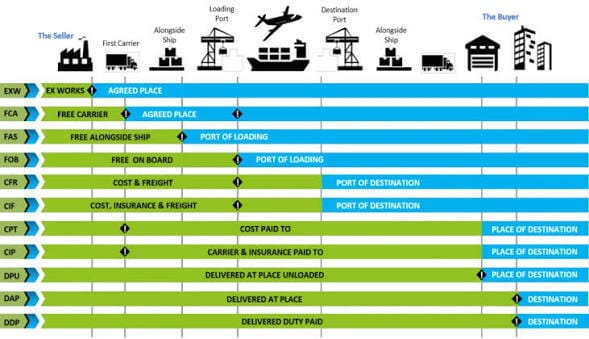
Here’s the truth: most beginners only need to master four terms — EXW, FOB, CIF, and DDP. These cover about 90% of real transactions I’ve negotiated across Alibaba, Etsy, and Amazon supplier deals.
- EXW (Ex Works): Seller does the least, buyer does the most
- FOB (Free on Board): Seller handles origin, buyer takes over at the port
- CIF (Cost, Insurance, Freight): Seller pays freight and insurance to destination port
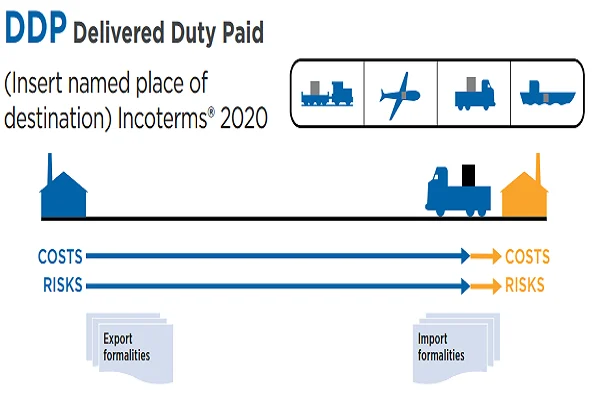
- DDP (Delivered Duty Paid): Seller does everything, including customs at destination
Once you understand the logic of “who’s holding the risk right now,” the rest becomes memorization, not confusion.
EXW Explained: When Seller Does the Least
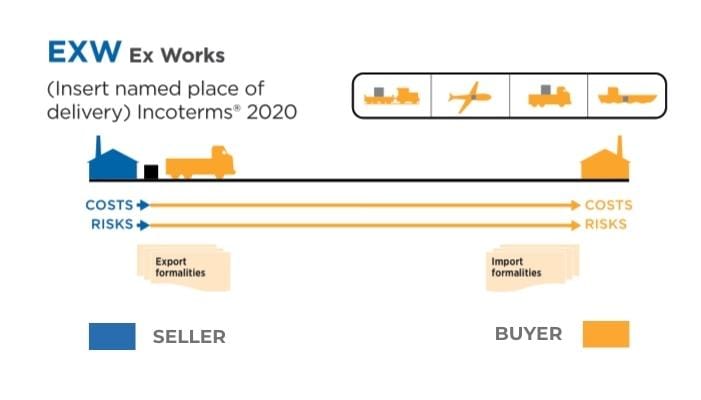
EXW (Ex Works) means the seller’s responsibility ends the moment goods are ready at the factory or warehouse door, and the buyer handles everything else — loading, export clearance, freight, duties, and final delivery.
I use EXW mainly when I’m quoting new buyers who already have their own freight forwarder in Vietnam and want full control over logistics. It’s also the cleanest way to quote a “pure product price” without any hidden logistics markup, which builds trust with experienced importers.
But here’s a mistake I made early on with a TP-Menswear shipment: I quoted EXW to a first-time buyer from Eastern Europe who had zero experience with Vietnamese export procedures. They didn’t know they needed a licensed forwarder to even get the goods out of our factory gate. The shipment sat for two weeks while they scrambled to find someone.
My rule now: only offer EXW to buyers who explicitly ask for it or who’ve clearly shipped from Vietnam before. For beginners on the buying side, EXW looks cheap on paper but often costs more in stress, delays, and unexpected local trucking fees they didn’t budget for.
| Responsibility | Seller | Buyer |
|---|---|---|
| Packaging | Yes | No |
| Export customs | No | Yes |
| Main freight | No | Yes |
| Import duties | No | Yes |
FOB and CIF: The Two Most Common Terms I Actually Use
FOB (Free on Board) means the seller covers everything up to loading goods onto the vessel at the origin port, while CIF (Cost, Insurance, Freight) adds ocean freight and minimum insurance to the destination port on top of that.
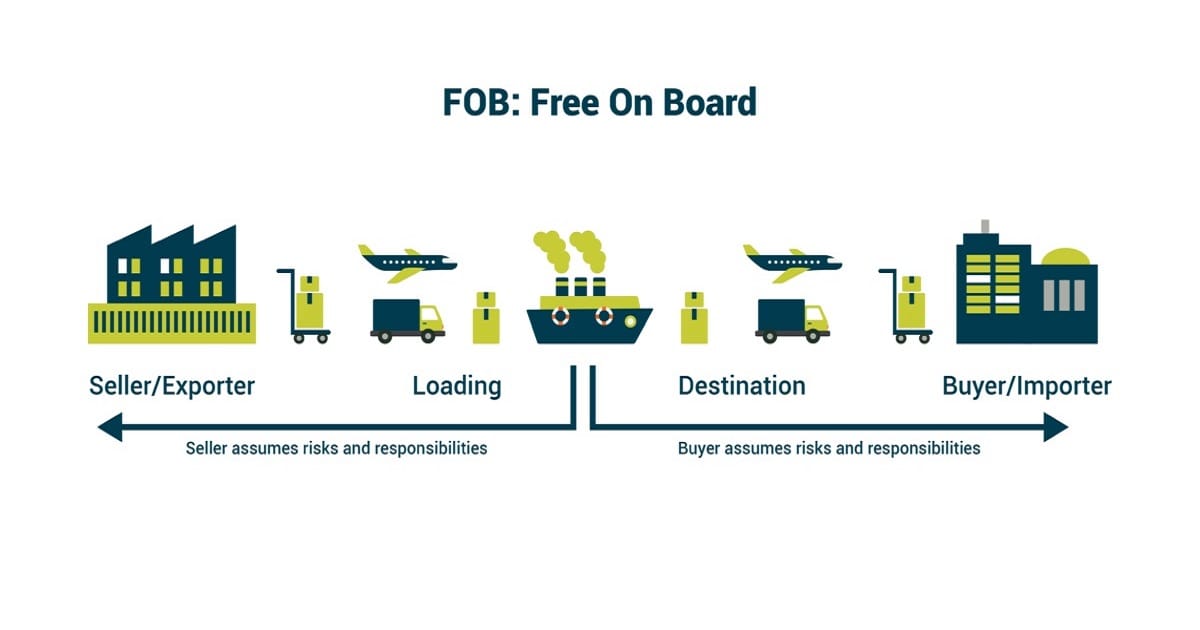
FOB is my default recommendation for most new exporters, and honestly, for most beginner buyers too. Under FOB, I as the seller handle everything up to loading the goods onto the vessel at the Vietnamese port — export clearance, domestic trucking, port handling. Once the goods are on the ship, risk and remaining cost transfer to the buyer.
Why do I like FOB so much? It splits responsibility at a clear, physical, verifiable point: the ship’s rail. For Gomery Ceramics, FOB became our standard quote because buyers could easily compare our price against competitors without guessing what logistics markup was hidden inside.
CIF takes FOB and adds two things: the seller now also pays for main ocean freight and minimum insurance coverage to the destination port. This sounds convenient for the buyer, but I always tell new sellers to be careful here — you’re now managing a cost (freight rates) that fluctuates weekly and can eat your margin if you quote too far in advance.
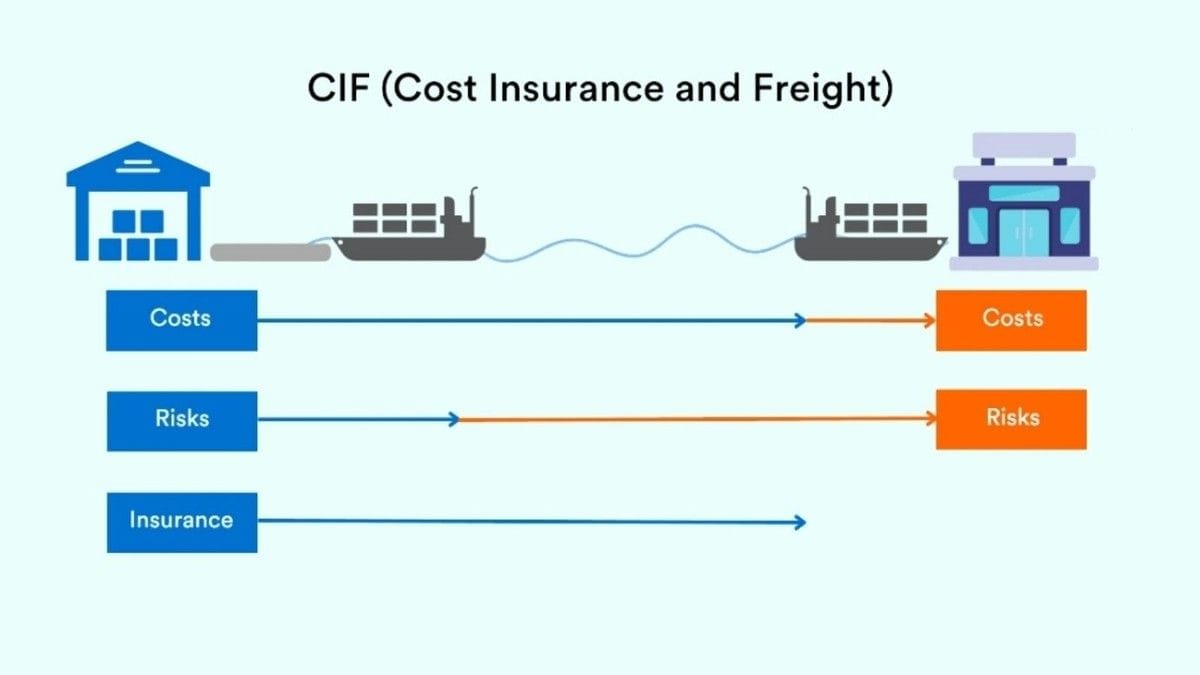
A real example: I quoted a CIF price to a US buyer during a period of stable freight rates. Three weeks later, before the container even sailed, freight costs spiked nearly 30% due to a regional port congestion issue. Because I’d locked in CIF pricing, that increase came straight out of my profit, not the buyer’s pocket.
My advice for beginners: use FOB when you want predictable margins and let the buyer arrange their own freight forwarder. Use CIF only when you have a reliable freight partner with locked-in rates, or when the buyer specifically needs an all-in landed cost to port for their own budgeting.
Confused about which Incoterm fits your Alibaba listings?
Need professional Alibaba storefront management? Big E Co. offers end-to-end services. Learn more →
DDP: The Term That Sounds Great But Comes With Risks
DDP (Delivered Duty Paid) means the seller handles everything all the way to the buyer’s door, including import customs clearance and duties in the destination country — the most convenient option for buyers but the highest risk for sellers.
Amazon FBA sellers love asking for DDP because it simplifies their supply chain to a single line item. When I managed shipments for clients selling on Amazon, DDP quotes were extremely popular for exactly this reason — no surprise customs bills, no coordination with a local broker.
However, DDP is genuinely risky for sellers who don’t fully understand the destination country’s import regulations. I’ve seen sellers quote DDP to EU buyers without accounting for VAT registration requirements, then get stuck either eating the cost or delaying the shipment while sorting out tax paperwork they didn’t know they needed.
Here’s my personal rule: only quote DDP if you already have an experienced customs broker in the destination country, or if you’re working through a fulfillment partner (like Amazon FBA prep centers) who handles this routinely. Otherwise, the “convenience” of DDP can quietly turn into weeks of delay and unplanned costs.
- Best for: Amazon FBA shipments, experienced sellers with local brokers
- Risky for: First-time exporters unfamiliar with destination customs rules
- Key tip: Always get a landed cost quote from your broker before confirming DDP pricing
How I Choose the Right Incoterm for Each Deal
I choose an Incoterm based on three factors: the buyer’s shipping experience, whether I have reliable freight and customs partners on that route, and how price-sensitive the negotiation is.
First, how experienced is this buyer with international shipping? New buyers generally do better with CIF or DDP because it reduces the number of moving parts they need to manage themselves.
Second, do I have reliable freight and customs partners on both ends of this specific route? If yes, I’m comfortable quoting CIF or even DDP. If the route is new to me, I stick with FOB and let the buyer’s forwarder handle the unfamiliar territory.
Third, how price-sensitive is this negotiation? FOB quotes are the easiest for buyers to compare across suppliers since it isolates product cost from logistics cost. When I’m competing hard on price transparency, FOB wins every time.
One more practical tip: always write the Incoterm with the specific location, like “FOB Cat Lai Port” or “DDP Los Angeles Warehouse.” I’ve seen too many disputes arise simply because someone wrote “FOB” or “CIF” without specifying exactly where responsibility transfers.
For sellers managing listings across multiple marketplaces, our guide on Alibaba storefront management covers how to keep shipping terms consistent across platforms.
Conclusion
Getting comfortable with Incoterms EXW FOB CIF DDP simple explanation for beginners really comes down to one question: at what point does risk and cost shift from seller to buyer? Once that clicks, quoting international shipments stops feeling like guesswork and starts feeling like a strategic tool to protect your margins. If you’re setting up product listings on Alibaba, Etsy, or Amazon, get your Incoterms right before you quote your next buyer.
Ready to simplify your export logistics and Incoterm quoting?
Need professional Alibaba storefront management? Big E Co. offers end-to-end services. Learn more →
Bạn muốn đồng hành cùng Hồ Alva?
Gia nhập cộng đồng Saigon Ladyboss — nơi những người phụ nữ bản lĩnh cùng nhau học và lớn lên.
Gia nhập Saigon Ladyboss →