

I’m Ho Alva, and I still remember the night I sat in my small office in Binh Duong, staring at an Amazon Seller Central dashboard that showed exactly $0 in sales after three weeks of listing Gomery Ceramics products. My co-founder asked if we’d made a mistake choosing Amazon over just doubling down on Alibaba wholesale. I didn’t have a good answer that night. But five years later, running FBA operations for Gomery Ceramics and helping TP-Menswear launch on Amazon US, I can tell you selling on Amazon FBA from Vietnam is absolutely possible — but almost nobody tells you the truth about how messy the first six months really are. This guide is everything I wish someone had handed me back then: the real numbers, the real mistakes, and the real workarounds Vietnamese sellers actually use.
Why Vietnamese Sellers Are Moving Into Amazon FBA Right Now
When I started with Gomery Ceramics in 2019, we were 100% dependent on Alibaba B2B orders and a handful of Etsy listings. The margins were thin because we were always selling to middlemen. Amazon FBA changed that equation because it let us sell directly to US consumers at retail price, which for ceramics meant 3-4x the margin compared to wholesale.
Vietnam’s position right now is genuinely favorable. Manufacturing costs are still 15-20% lower than China for many categories, and the US-Vietnam trade relationship has stayed relatively stable even through tariff turbulence that hit Chinese sellers hard. I’ve watched several of my Alibaba clients pivot part of their production to Vietnam specifically so their Amazon sellers could avoid Section 301 tariffs.
The Real Growth Numbers I’ve Seen
In my own network of Vietnamese sellers — mostly in ceramics, home goods, and apparel — I’d estimate 60% more sellers entered Amazon FBA between 2022 and 2024 compared to the previous three years combined. That’s not an official statistic, that’s from talking to suppliers in Binh Duong, Bat Trang, and Tan Phu who now get asked constantly about FBA-compliant packaging.
The categories doing best from Vietnam right now are home decor, kitchenware, ceramics, furniture components, and menswear basics. These are exactly the categories where Vietnamese factories already have strong OEM capability from years of Alibaba wholesale work.
Why This Isn’t As Easy As YouTube Makes It Look
I need to be honest here because I’ve seen too many Facebook groups full of people who watched one video and think they’ll hit $10k/month in 90 days. Selling on Amazon FBA from Vietnam real experience means dealing with things those videos never mention: no direct Amazon office in Vietnam, longer verification times, and payment processing that requires more paperwork than US-based sellers face.
Setting Up Your Amazon Seller Account From Vietnam
This is where most people get stuck for weeks, so let me walk through what actually worked for us with Gomery Ceramics.
Business Registration Requirements
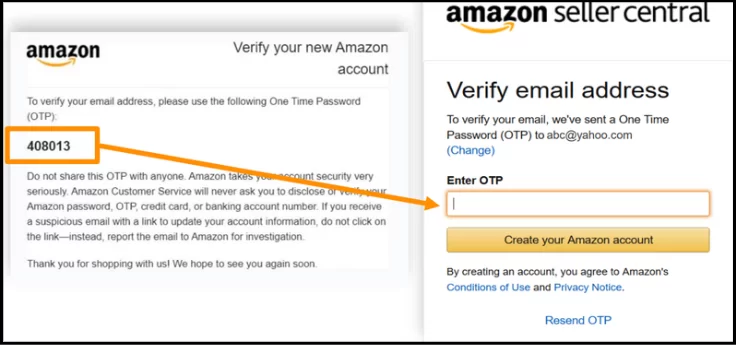
Amazon requires a registered business entity, and here Vietnamese sellers have two real options. You either register your Vietnamese business (Ho Kinh Doanh or Cong Ty TNHH) and use that entity directly, or you set up a US LLC. We tried both approaches across our two brands.
For Gomery Ceramics, we used our existing Vietnamese company registration, which worked but required more document verification rounds — Amazon asked for our business license translated and notarized, plus utility bills matching the registered address. It took us 5 weeks to get fully verified.
For TP-Menswear, we set up a US LLC (Wyoming, cost about $150 through a registered agent) specifically because we wanted a US bank account and smoother tax handling. Verification took 12 days. If I were starting fresh today, I’d lean toward the US LLC route for anyone serious about scaling past $50k/month.
Bank Account And Payment Setup
This is the part nobody explains clearly. You cannot simply link a Vietnamese bank account to Amazon Seller Central in most cases — you need a payment service provider that supports Vietnam. We’ve used Payoneer for both brands, and it’s been reliable, though the currency conversion fee (typically around 2%) does eat into margins over time.
Some sellers I know use World First or Wise instead. My advice: open accounts with two providers before you need them, because Amazon occasionally requires you to switch payment methods during verification reviews, and scrambling to set up a new account mid-review can delay your launch by weeks.
Identity Verification Documents
Have these ready before you start the application, not after:
- Passport or Vietnamese ID card (CCCD) with clear photo
- Business registration certificate (translated to English)
- Bank statement or utility bill matching your registered address, dated within 180 days
- A video call verification is increasingly common — Amazon may schedule this, and having a quiet space with good lighting genuinely matters
Product Research And Sourcing: What Actually Sells From Vietnam
I’ve made expensive mistakes here, so let me save you some money.
Categories With Real Vietnam Advantage
Ceramics and pottery items are the clearest win because of skilled craftsmanship clusters like Bat Trang and Binh Duong, where Gomery Ceramics is based. We ship handmade mugs, planters, and decorative bowls that would cost 40% more to produce with similar quality in the US or even China at comparable craftsmanship levels.
Menswear basics — t-shirts, casual pants, linen shirts — are another strong category because Tan Phu and the broader Ho Chi Minh City garment district has decades of export experience with US and EU quality standards already built in from years of contract manufacturing.
Furniture components, rattan and wicker products, and coffee-related goods (given Vietnam’s coffee export reputation) round out the categories I’d recommend researching first.
What I’d Avoid As A First Product
Skip anything requiring FDA approval, electronics with battery components (customs and Amazon compliance get complicated fast), and anything where you can’t personally verify quality control on-site or through a trusted agent. I learned this lesson when an early TP-Menswear batch had inconsistent sizing that we didn’t catch until 200 units were already in FBA inventory — that mistake cost us roughly $1,800 in returns and inventory removal fees.
Using Alibaba And Local Suppliers Together
Even with strong Vietnamese manufacturing, we sometimes source components or packaging materials through Alibaba because certain items — poly bags meeting Amazon’s specific requirements, branded boxes, silica packets — are cheaper and faster to get through established Alibaba suppliers than local ones.
Sourcing And Storefront Management Made Simple
Need professional Alibaba storefront management? Big E Co. offers end-to-end services. Learn more →
Shipping From Vietnam To Amazon FBA Warehouses
This section trips up more sellers than any other part of the process, so let’s go step by step.
Air Freight Vs Sea Freight Reality
For our first Gomery Ceramics shipment, we used air freight because we were nervous about stockouts and wanted to test the market fast. It cost us roughly $6.50/kg from Ho Chi Minh City to a US West Coast FBA warehouse, and the shipment of 300 units arrived in 6 days.
Once we validated demand, we switched to sea freight for reorders, which brought costs down to around $1.20-$1.80/kg depending on the carrier and season, but transit time stretched to 25-35 days including customs clearance. My rule now: air freight for your first test batch (under 500 units), sea freight once you have proven sales velocity and can forecast 6-8 weeks ahead.
Working With Freight Forwarders
Don’t try to handle customs and FBA labeling requirements yourself in the beginning. We work with freight forwarders who specialize in Amazon FBA shipments specifically, not general cargo forwarders. The difference matters because FBA has strict box labeling, pallet requirements, and carton content requirements that general forwarders often get wrong.
Expect to pay a bit more for FBA-specialized forwarders, but the cost of a rejected shipment at Amazon’s warehouse — which happened to us once with a labeling error — is far higher. That single mistake delayed our inventory by 11 days and cost about $340 in reprocessing fees.
Customs And Documentation
Commercial invoices need accurate HS codes matching your product category exactly. We’ve had shipments held at customs for 4-5 extra days simply because the HS code didn’t match the product description closely enough. Always double-check codes with your forwarder against current US customs classifications before shipping.
| Shipping Method | Cost per kg (approx) | Transit Time | Best For |
|---|---|---|---|
| Air Freight | $5.50-$7.00 | 5-8 days | First test batches, restocks under deadline |
| Sea Freight (FCL/LCL) | $1.00-$2.00 | 25-35 days | Proven products, bulk reorders |
| Express Courier (DHL/FedEx) | $8.00-$12.00 | 3-5 days | Samples, emergency restocks only |
Amazon Fees And Real Profit Margins From Vietnam
Let’s talk actual numbers because vague percentages don’t help anyone plan a real business.
Breaking Down A Real Gomery Ceramics Product
Take one of our best-selling ceramic planters, priced at $24.99 on Amazon US. Here’s the real cost breakdown per unit:
- Manufacturing cost (Binh Duong factory): $3.80
- Domestic transport to port + freight forwarder fee: $0.90
- Sea freight cost allocated per unit: $0.65
- Amazon referral fee (15% for home category): $3.75
- FBA fulfillment fee (standard size): $4.20
- Storage fee (monthly average allocated per unit): $0.35
- PPC advertising cost allocated per unit: $2.10
Total cost per unit comes to about $15.75, leaving a net margin of roughly $9.24, or about 37%. That’s healthier than most wholesale margins we ever got through pure Alibaba B2B, which is exactly why this shift made sense for us.
Hidden Fees That Surprise New Sellers
Long-term storage fees kick in after 365 days and can be brutal if you overordered inventory — we got hit with this on a slow-moving TP-Menswear jacket line and ended up doing a liquidation just to clear FBA storage space. Also watch for removal order fees, unplanned service fees (when your box doesn’t meet dimension requirements), and return processing fees, which for apparel can run 20-30% of units depending on sizing accuracy.
Currency Conversion Impact
Since we’re paid in USD but pay suppliers, staff, and rent in VND, currency conversion fees through Payoneer or similar platforms typically cost us an additional 1.5-2% on every payout. Over a year, on $200,000 in revenue, that’s $3,000-$4,000 just in conversion costs — budget for this specifically rather than treating it as a surprise.
Listing Optimization And Getting Your First Sales
Having a good product means nothing if your listing doesn’t convert, and this is where I spent way too much time trial-and-erroring before things clicked.
Photography That Actually Works
For Gomery Ceramics, lifestyle photography showing the product in a styled home setting outperformed plain white-background shots by roughly 25% in conversion rate based on our A/B testing through Amazon’s Manage Your Experiments tool. We now do all photography locally in Binh Duong with a small team rather than outsourcing to overseas studios, which cut our photography costs by about 60%.
Keyword Research For Vietnamese Sellers
Tools like Helium 10 and Jungle Scout work the same regardless of where you’re based, but I’d recommend budgeting for these from day one rather than guessing keywords. We use Helium 10’s Cerebro to reverse-engineer what’s working for competitor listings before writing our own titles and bullet points.
Launch Strategy That Worked For Us
For new listings, we typically run a soft launch with 15-20% off list price for the first two weeks combined with Sponsored Products campaigns at a slightly aggressive bid (targeting top-of-search placement even at a loss) just to generate the initial sales velocity Amazon’s algorithm rewards. This front-loaded investment typically costs us $300-$500 per new SKU but shortens time-to-profitability from 8-10 weeks to 4-5 weeks.
Reviews And Vietnamese Seller Trust Signals
Customers rarely notice or care that a product ships from Vietnam if the listing quality and reviews are strong. What matters more is consistent review generation — we use Amazon’s Vine program for new listings, which gave Gomery Ceramics 12-18 reviews within the first month for new SKUs, giving us enough social proof to compete against established sellers.
Common Mistakes Vietnamese Sellers Make (And How I Fixed Mine)
I’ll be direct about my own failures here because pretending everything went smoothly wouldn’t help anyone.
Underestimating Lead Times
Early on with TP-Menswear, we calculated reorder timing based only on manufacturing time, forgetting to add freight forwarder processing, customs clearance, and Amazon’s inbound receiving time (which can take 3-10 days depending on warehouse congestion). We went out of stock for 19 days on our best-selling polo shirt, losing our page-one ranking that took months to rebuild.
Now we calculate total lead time as: manufacturing (average 20-25 days) + domestic transport (2-3 days) + freight (5-35 days depending on method) + Amazon receiving (3-10 days) + safety buffer (7 days). We reorder when inventory hits a threshold calculated against this full timeline, not just manufacturing time.
Ignoring Amazon’s Category-Specific Compliance
Ceramics that contact food (mugs, bowls) may require compliance documentation under certain state regulations like California’s Proposition 65. We didn’t realize this initially and had a listing flagged, requiring us to submit lab testing documentation from an accredited lab, which cost about $280 per SKU and delayed relaunch by three weeks.
Pricing Too Low To Compete With China
Many new Vietnamese sellers assume they need to match Chinese seller pricing to compete, but that ignores Vietnam’s cost structure differences and destroys margin. We learned to price based on our actual cost-plus-margin model rather than racing to the bottom, and it’s been more sustainable even if unit volume growth is slightly slower.
Neglecting Trademark Registration
We delayed registering our Gomery brand trademark for the first year, thinking it was an unnecessary expense. Then a competitor started selling near-identical products under a confusingly similar name. Getting Amazon Brand Registry approved without a completed trademark took much longer and limited our access to A+ Content and Brand Store features during a critical growth period.
Tax And Legal Considerations For Vietnam-Based Sellers
This is the part people ask me about most in private messages, so let’s get specific.
US Tax Obligations
If you’re using a US LLC structure, you’ll need an EIN (Employer Identification Number) from the IRS, which is free to obtain but takes patience for foreign applicants since you can’t get one online without a US Social Security Number — we did ours via fax application, which took about 5 weeks. You’ll also need to file annual tax forms even with no US-based operations, typically Form 5472 alongside a pro forma 1120.
Vietnamese Tax Reporting
Income earned through Amazon still needs to be reported for Vietnamese tax purposes if you’re operating as a Vietnamese business entity or as an individual. We work with a local accountant familiar with cross-border e-commerce income specifically, because general accountants often don’t know how to categorize Amazon FBA revenue and Payoneer transfers correctly under current Vietnamese tax code.
Sales Tax And Amazon’s Marketplace Facilitator Role
The good news: Amazon automatically collects and remits sales tax in most US states under Marketplace Facilitator laws, so you generally don’t need to register for sales tax individually in most states. Confirm this remains accurate for your specific product category, since some items have exceptions.
Building A Sustainable FBA Business From Vietnam Long-Term
After five years, here’s what separates the Vietnamese sellers who build real businesses from those who burn out after one product launch.
Diversifying Beyond A Single Product
Gomery Ceramics started with three SKUs and now runs over 40 active listings. The sellers who survive Amazon’s algorithm changes and increased competition are the ones who build out product lines rather than betting everything on one hero product.
Building Direct Relationships With Factories
As we scaled, moving from working through trading companies to direct factory relationships in Binh Duong cut our costs by 12-18% and improved quality control significantly. This takes time to build trust, but it’s worth pursuing once you have proven sales volume to negotiate with.
Balancing Amazon With Other Channels
Neither Gomery Ceramics nor TP-Menswear depends solely on Amazon. We maintain Etsy listings for ceramics (better margins on handmade, artisan-positioned items) and continue Alibaba B2B relationships for bulk orders. This diversification protected us when Amazon suspended one of our listings for 11 days during an unexpected policy review — Amazon revenue dropped, but other channels kept cash flow steady.
[INTERNAL LINK: Etsy vs Amazon for Vietnamese sellers comparison]
Reinvesting Profit Strategically
In our early years, we reinvested almost 70% of profit back into inventory and advertising. As the business matured, we shifted toward reinvesting in quality control systems, dedicated staff for Amazon account management, and trademark/IP protection — the unglamorous stuff that actually protects long-term brand value.
Frequently Asked Questions About Selling On Amazon FBA From Vietnam
Do I need a US business entity to sell on Amazon FBA from Vietnam?
No, you can use your Vietnamese business registration, but expect a longer verification process (we experienced 5 weeks) and consider that a US LLC often simplifies banking, tax filing structure, and payment processing for around $150-300 in setup costs.
How much capital do I need to start selling on Amazon FBA from Vietnam?
Based on our real launches, budget a minimum of $8,000-$12,000 to cover initial inventory (300-500 units), sample testing, freight, Amazon account setup, initial PPC budget, and a 3-month operating buffer. Starting with less than $5,000 usually means undersized inventory batches that can’t sustain ranking momentum.
Which products from Vietnam perform best on Amazon?
From our direct experience, ceramics and home decor, menswear basics, rattan/wicker products, and kitchenware perform strongest because Vietnamese manufacturing already has quality control systems built for export markets from years of Alibaba wholesale relationships.
How long does Amazon seller account verification take from Vietnam?
Our experience ranged from 12 days (US LLC structure) to 5 weeks (Vietnamese business entity). Have all documents translated and notarized beforehand, and expect possible video verification calls that can add another week if rescheduling is needed.
Is sea freight or air freight better for shipping from Vietnam to FBA warehouses?
Use air freight ($5.50-$7.00/kg, 5-8 days) for initial test batches under 500 units, and switch to sea freight ($1.00-$2.00/kg, 25-35 days) once you have proven sales velocity and can plan inventory 6-8 weeks ahead.
What’s a realistic profit margin selling FBA from Vietnam?
Our real numbers across Gomery Ceramics and TP-Menswear range from 25-40% net margin depending on category, after accounting for manufacturing, freight, Amazon fees, advertising, and currency conversion costs.
Do I need Amazon Brand Registry if I’m selling from Vietnam?
Yes, strongly recommend it. Trademark registration should start as early as possible — we delayed this and faced a competitor copying our brand name before we secured Brand Registry protection and A+ Content access.
Can I manage my Amazon FBA business remotely from Vietnam without US visits?
Yes, we’ve managed both brands entirely from Vietnam without any required US visits. Everything from account verification to customer service to advertising management can be done remotely with the right payment and communication tools in place.
What are the biggest hidden costs sellers from Vietnam underestimate?
Currency conversion fees (1.5-2% per payout), long-term storage fees after 365 days, compliance/lab testing costs for regulated categories like food-contact ceramics, and return processing fees which can hit 20-30% for apparel due to sizing mismatches.
Should I use a freight forwarder or handle shipping myself?
Use an FBA-specialized freight forwarder, not a general cargo company. Amazon’s box labeling, pallet, and carton requirements are strict, and a single labeling mistake cost us $340 in reprocessing fees and 11 days of delayed inventory.
Final Thoughts From Five Years On The Ground
Selling on Amazon FBA from Vietnam real experience taught me that the fundamentals matter more than any shortcut or trending hack. Solid manufacturing relationships, honest cost calculations, and patience with Amazon’s verification process beat any get-rich-quick promise you’ll see in Facebook groups. Gomery Ceramics and TP-Menswear didn’t grow because we found a secret trick — we grew because we treated every mistake as a system to fix, from lead time calculations to compliance documentation.
If you’re based in Vietnam and considering FBA, start small, calculate your real margins honestly, and build supplier relationships before you scale advertising spend. The market advantage is real, but execution discipline is what actually determines whether you succeed.
Ready To Scale Your Amazon FBA Business From Vietnam?
Need professional Alibaba storefront management? Big E Co. offers end-to-end services. Learn more →
Bạn muốn đồng hành cùng Hồ Alva?
Gia nhập cộng đồng Saigon Ladyboss — nơi những người phụ nữ bản lĩnh cùng nhau học và lớn lên.
Gia nhập Saigon Ladyboss →