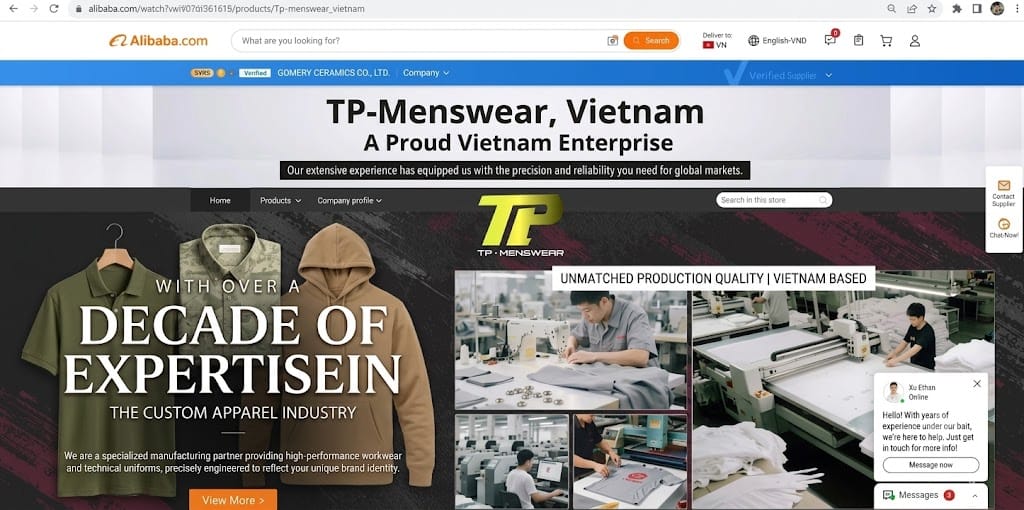
I get this question all the time from clients: is Alibaba Gold Supplier trustworthy verified, or is it just a paid badge with no real substance? This guide is for SME founders sourcing on Alibaba who need to know what the badge actually guarantees before wiring money. Honestly, after running storefronts for Gomery Ceramics and TP-Menswear for years, I’ve seen both sides of this coin. The badge itself isn’t a scam, but it’s also not the full guarantee most buyers assume it is. Let me break down exactly what this status means, what it doesn’t mean, and how you can actually verify a supplier before you commit to a bulk order.
What Does “Gold Supplier” Actually Mean on Alibaba?
Short answer: “Gold Supplier” was Alibaba’s old name for a paid membership tier — it means the company paid to unlock premium visibility, not that it passed a quality inspection. Alibaba retired this name years ago and replaced it with “Verified Supplier” and other paid membership tiers, but the search term stuck around in forums and old blog posts.
In practice, what this badge shows is that a company paid Alibaba an annual membership fee (often several thousand dollars) to unlock premium features: better storefront placement, more product listings, and trust badges displayed to buyers. That’s it. It’s a subscription tier, not a background check on the factory’s quality control or financial health.
I’ve managed this exact membership for Gomery Ceramics, and I can tell you firsthand — Alibaba asks for business registration documents, but the review process is administrative, not investigative. They confirm the company exists and is legally registered in China or Vietnam. They do not visit the factory floor or test product samples.
So when clients ask me if the badge alone proves reliability, my honest answer is: it proves the seller is a real, paying business — nothing more, nothing less.
What “Verified” Actually Checks (and What It Doesn’t)
“Verified Supplier” status means a third-party inspection company physically visited the factory and confirmed it exists and roughly matches its claims — it does not guarantee consistent product quality. This involves inspection firms like SGS, Bureau Veritas, or TÜV visiting the supplier’s actual facility.
Here’s what a genuine verification typically covers:
- Business license authenticity — confirming the company is legally registered and operational
- Factory capability assessment — production capacity, equipment, and staff count
- On-site photos — real images of the production floor, not stock photos
- Legal representative verification — checking the owner’s identity matches company records
What it usually does NOT cover: product quality consistency, export compliance history, or financial stability. I’ve worked with factories that passed verification easily but still had inconsistent QC between batches. Verification tells you the factory exists and roughly matches its claims — it doesn’t guarantee the goods coming out of it will meet your standards every single time.
When I sourced ceramic glazes for Gomery, I still requested my own third-party inspection before the first bulk order, even though the supplier was “Verified.” That extra step caught a glaze inconsistency the Alibaba report never flagged.
Red Flags I’ve Personally Seen Even on “Trusted” Profiles
Even Gold or Verified suppliers can show red flags like stock photos, templated reviews, or reluctance to do live video calls — the badge doesn’t stop sellers from cutting corners elsewhere. This is the part most guides skip, but it’s the part that matters most from my experience running these accounts daily.
Some suppliers pay for premium membership specifically because they know buyers associate it with trust — then use that trust to cut corners elsewhere. I’ve seen a few patterns repeat across both ceramics and menswear sourcing:
- Stock photos instead of real product images — a Gold/Verified badge doesn’t stop sellers from using generic catalog photos
- Reviews that seem templated — overly generic five-star comments with no specific details
- Reluctance to do video calls — a legit factory owner will hop on WeChat or Zoom without hesitation
- Mismatched company name and bank account — payment requested to a personal account instead of the registered business
With TP-Menswear, I once found a “Verified” supplier whose transaction history showed almost no repeat buyers — a sign the initial sales might have been friends or seed reviews rather than organic business. The badge looked perfect. The actual trading pattern told a different story.
My rule of thumb: treat the badge as step one of due diligence, never the final word.
Not sure which suppliers to trust on Alibaba?
Need professional Alibaba storefront management? Big E Co. offers end-to-end services. Learn more →
My 5-Step Process to Verify a Supplier Beyond the Badge
Beyond the badge, I always cross-check the business license, request a live video walkthrough, order a paid sample, and review transaction history before recommending a supplier. Here’s exactly what I do before recommending any supplier to a client, badge or no badge:
1. Cross-check the business license number
Every Chinese company has a registration number you can search on the National Enterprise Credit Information Publicity System. It takes five minutes and confirms the company isn’t a shell.
2. Request live video of the production line
Ask them to walk through the factory on a live call, not a pre-recorded video. Real factories rarely refuse this — hesitation is a signal.
3. Order a paid sample, not a free one
Paying for the sample (even a small amount) filters out low-effort sellers and gives you a real look at product quality before committing to bulk quantity.
4. Check transaction history and repeat buyer ratio
Alibaba shows total transactions on the storefront. Look for consistent, steady order volume over months, not a spike of five-star reviews in one week.
Comparing Trust Signals: Badge vs. Real Verification
No single trust signal on Alibaba is enough on its own — combine at least three, such as membership status, verification badge, transaction history, and third-party inspection, before placing a large order. Here’s a quick comparison table I share with all my clients:
| Trust Signal | What It Confirms | What It Doesn’t Confirm |
|---|---|---|
| Gold/Premium Membership | Company paid annual fee, registered legally | Product quality, financial health |
| Verified Supplier Badge | Physical factory exists, matches basic claims | Consistent QC, export experience |
| Transaction History | Real order volume and repeat buyers | Whether those buyers were satisfied long-term |
| Third-Party Inspection | Product quality at time of inspection | Consistency across future batches |
The takeaway here: no single signal is enough on its own. Combine at least three of these before placing a large order.
Conclusion: Trust the Badge, But Verify Everything Else
So, is Alibaba Gold Supplier trustworthy verified? My honest answer: it’s a helpful starting filter, not a finish line. It tells you the company is real and paying to be visible — not whether the goods will hold up. Every brand I’ve built through Alibaba was saved at least once by verification steps beyond the badge itself.
If you want a deeper look at building a fully trustworthy Alibaba sourcing strategy from account setup to first shipment, check out our complete guide: [INTERNAL LINK: Alibaba Selling Guide for Beginners].
Want a trusted expert to vet suppliers for you?
Need professional Alibaba storefront management? Big E Co. offers end-to-end services. Learn more →
Bạn muốn đồng hành cùng Hồ Alva?
Gia nhập cộng đồng Saigon Ladyboss — nơi những người phụ nữ bản lĩnh cùng nhau học và lớn lên.
Gia nhập Saigon Ladyboss →