I still remember the first time I got burned on Alibaba. It was 2019, I was sourcing ceramic mugs for a client, and I picked a supplier purely because their MOQ was low and their photos looked gorgeous. Three months later, half the shipment arrived with hairline cracks and mismatched glazing. That mistake cost us nearly $4,000 and a very unhappy customer in the US. Since then, learning how to evaluate Alibaba suppliers reliability has become the single most important skill I’ve built — more important than negotiation, more important than logistics.
Over the past 5 years running sourcing and storefront operations for Gomery Ceramics in Binh Duong and TP-Menswear in Tan Phu, I’ve vetted probably 300+ suppliers across categories — ceramics, textiles, hardware, packaging. I’ve developed a system that isn’t fancy, but it works. This guide is everything I wish someone had handed me before that first bad order. No fluff, just what actually matters when you’re deciding whether to wire money to a factory you’ve never seen.
Why Evaluating Alibaba Suppliers Reliability Matters More Than Price
When I train new sourcing staff at Big E Co., the first thing I tell them is: price is the last thing you should compare. Everyone fixates on getting the cheapest unit cost, but a “cheap” supplier who ghosts you after deposit, ships defective goods, or can’t hit deadlines will cost you far more in refunds, chargebacks, and damaged reputation.
I’ve seen Vietnamese SMEs lose entire seasons of revenue because they chose a supplier 8% cheaper without checking anything else. On Etsy and Amazon, where customer reviews make or break your listing, one bad batch from an unreliable Alibaba supplier can tank your rating for months. Reliability isn’t a soft metric — it’s the backbone of your margin.
The Real Cost Of Choosing Wrong
Let me break down what an unreliable supplier actually costs you, based on real numbers from projects I’ve managed:
- Refunds and chargebacks: On Amazon, a defect rate above 2-3% can trigger account health warnings, not just lost sales.
- Reshipping costs: Air freight to fix a bad batch can eat 20-30% of your original margin.
- Time lost: Finding a replacement supplier mid-season can delay launches by 6-8 weeks.
- Reputation damage: One viral negative review on Etsy can suppress your search ranking for months.
This is why, at Gomery Ceramics, we now spend 2-3 weeks vetting a new supplier before ever placing a bulk order — even if it feels slow. That upfront patience has saved us far more than it’s cost us.
How To Evaluate Alibaba Suppliers Reliability: Reading Verification Badges Correctly
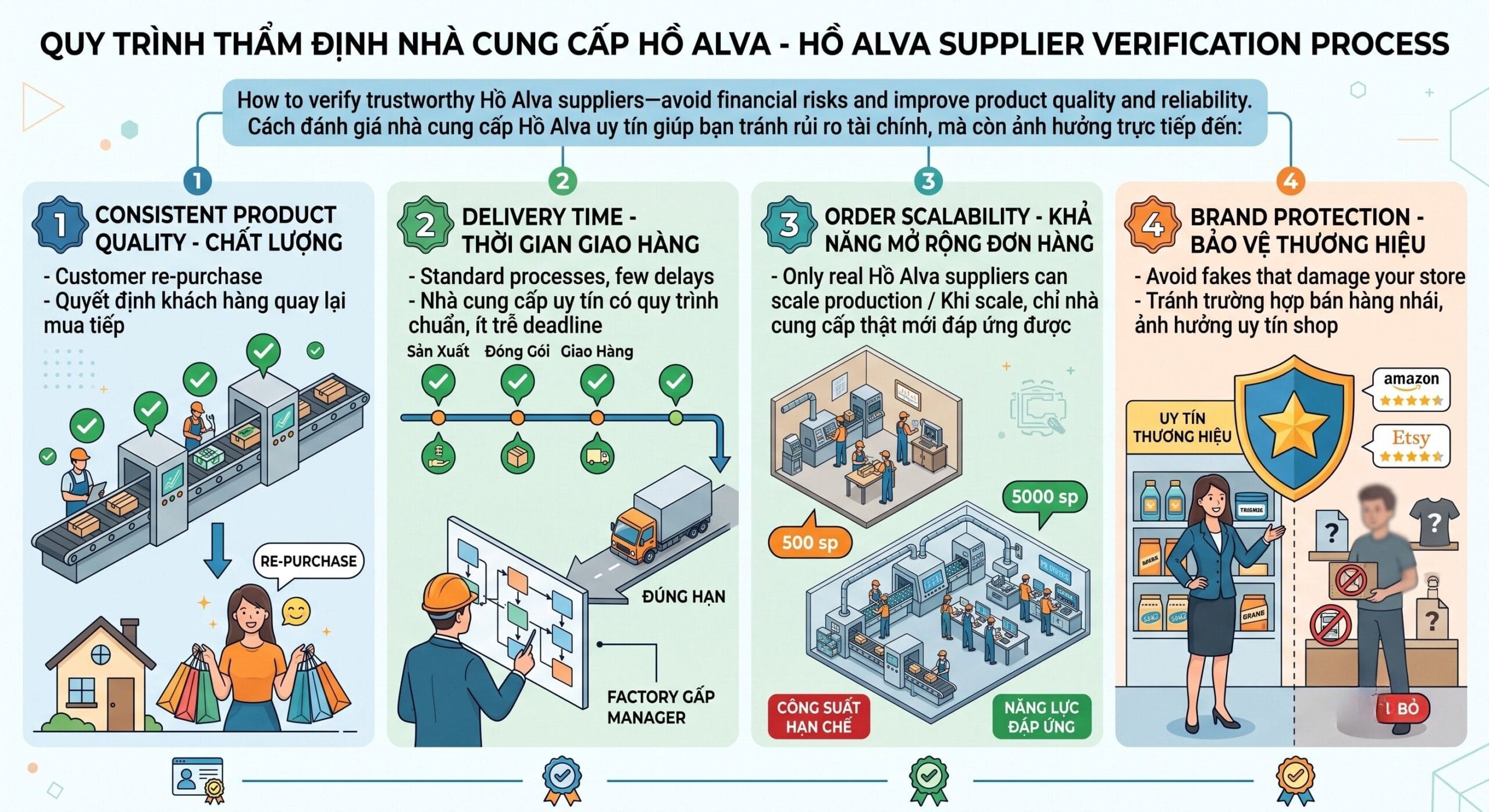
Alibaba gives you several badges and labels, but most buyers misread what they actually mean. Let me clarify because this trips up almost everyone I train.
Gold Supplier vs Verified Supplier vs Trade Assurance
Gold Supplier just means the company paid an annual membership fee to Alibaba. It does NOT mean they’ve been audited or verified for quality. I’ve met Gold Suppliers who were basically trading companies with no real factory.
Verified Supplier (with the checkmark) is stronger — it means a third-party inspection company (usually SGS, Bureau Veritas, or TÜV) has physically visited and confirmed the business registration, factory size, and sometimes production capacity. Always click into the verification report; it usually shows photos of the actual facility and sometimes production equipment.
Trade Assurance is Alibaba’s own payment protection — if the supplier fails to meet agreed terms (quality, shipping time), you can file a claim. This is not a trust signal about the supplier’s quality, it’s a safety net for your money. I insist on Trade Assurance for every first order, no exceptions.
What The Badges Don’t Tell You
None of these badges tell you about:
- Actual on-time delivery history
- Communication responsiveness during production issues
- Whether they subcontract to a third factory without telling you
- Real customer satisfaction post-shipment
That’s why badges are step one of my evaluation, never the final decision. I treat them as a filter to shortlist, not a stamp of approval.
Checking Transaction History And Response Rate: What Numbers Actually Mean
Every Alibaba supplier profile shows transaction data — this is gold if you know how to read it correctly.
Response Rate And Response Time
I personally won’t work with a supplier whose response rate is below 90% or whose average response time exceeds 24 hours. In my experience, slow communication before you’ve even placed an order is a preview of what happens when there’s a production problem. Fast, clear responders tend to be more organized operationally too — this correlation has held true across nearly every supplier I’ve worked with for TP-Menswear.
Transaction Volume And Repeat Buyer Rate
Look for the “Transactions” tab, which shows total order value over the past 6 months and the top markets they ship to. A supplier doing $50,000+ monthly with buyers from Vietnam, the US, and Europe is generally more battle-tested than one with $2,000 total and no repeat buyers.
Pay attention to the repeat buyer percentage if visible — a supplier with 30-40% repeat purchase rate signals consistent quality, because buyers don’t come back to a factory that burned them once.
Reading Between The Lines On Reviews
Alibaba reviews are far less reliable than Amazon or Etsy reviews because many are incentivized or filtered. Still, I always check for:
- Reviews mentioning specific product defects (not just generic “good supplier”)
- Photos uploaded by actual buyers, not stock images
- Recency — a supplier with great reviews from 2021 but nothing recent is a yellow flag
I once found a ceramics supplier with 4.8 stars overall, but digging into recent reviews (last 3 months), three buyers separately mentioned “packaging weaker than before.” That told me something changed internally — maybe cost-cutting. We avoided them, and six months later I heard from a contact that they’d had a wave of shipping damage complaints.
Tired of guessing which Alibaba suppliers you can actually trust?
Need professional Alibaba storefront management? Big E Co. offers end-to-end services. Learn more →
The Sample Order: Your Most Important Reliability Test
I don’t care how impressive a supplier’s profile looks — I never skip the sample stage. This is where most reliability issues reveal themselves before you risk a full container.
What To Actually Test In A Sample
Don’t just check if the product looks nice. Evaluate:
- Material consistency: Does it match the spec sheet exactly (weight, thickness, fabric composition)?
- Packaging durability: Simulate rough handling — drop test for ceramics, stretch test for fabric seams.
- Communication during sample production: Do they send progress photos without being asked twice?
- Lead time accuracy: Did the sample arrive when promised, or with excuses?
For Gomery Ceramics, we request samples from at least 3 shortlisted suppliers before committing, even though it costs more upfront in shipping fees. It’s the cheapest insurance policy in the entire sourcing process.
Red Flags During The Sampling Stage
Watch for these warning signs:
- Supplier pushes hard to skip samples and go straight to bulk order
- Sample quality noticeably better than what arrives in bulk order (a classic bait-and-switch)
- Vague answers when you ask about raw material sourcing
- Refusal to allow a third-party inspection before shipment
I had a menswear supplier once who sent gorgeous cotton samples, then bulk shipped in a cheaper poly-cotton blend. We only caught it because our QC team did a burn test on random units from the shipment. Since then, third-party inspection before shipping is non-negotiable for every order over $5,000.
Video Calls And Factory Audits: Going Beyond The Screen
Photos and badges only go so far. If you’re placing a serious order — anything above $3,000-5,000 — I strongly recommend a video call with the supplier before committing.
What To Ask During A Video Call
I use this call to verify a few specific things:
- Ask them to walk the camera through the actual production floor, not just the showroom
- Request they show current work-in-progress orders (real factories are usually mid-production for other clients)
- Ask detailed technical questions about your specific product — vague answers reveal trading companies pretending to be manufacturers
- Confirm the business license name matches the Alibaba company name exactly
Third-Party Factory Audits
For larger, ongoing partnerships, I recommend paying for an independent factory audit (services like SGS, Intertek, or local Chinese inspection agencies run $200-400 per audit). This gives you an unbiased report on:
- Actual factory size and number of production lines
- Worker conditions and capacity
- Whether they subcontract your order to another factory
- Quality control systems in place
This might feel like overkill for a first small order, but once you’re planning to make this supplier a long-term partner — which is where the real margin gains happen — this audit pays for itself many times over.
[INTERNAL LINK: Alibaba Trade Assurance explained]
Vietnam Market Considerations When Vetting Alibaba Suppliers
Sourcing from Vietnam-based businesses adds a layer most guides don’t cover. Here’s what I’ve learned specifically operating between Binh Duong, Tan Phu, and Chinese suppliers.
Shipping Routes And Customs Realities
Suppliers with experience shipping to Vietnam (via Cat Lai Port, Hai Phong, or overland through Lang Son/Mong Cai border) tend to handle Vietnamese customs paperwork more smoothly. Ask directly: “Have you shipped to Vietnam before? Can you provide HS code documentation matching Vietnamese customs requirements?”
I’ve had shipments held up at Cat Lai for over 2 weeks because a supplier provided incorrect HS codes designed for US customs, not Vietnamese import regulations. Now I always confirm this upfront and put it in writing in the contract.
Currency And Payment Considerations
Most Alibaba suppliers quote in USD, but as a Vietnamese business, factor in:
- Bank transfer fees (Vietcombank, Techcombank typically charge $15-30 per international wire)
- Exchange rate fluctuation risk if placing large orders with 30-45 day production timelines
- Whether the supplier accepts partial payment via Alibaba Trade Assurance vs requiring full T/T wire
Language And Time Zone Advantages
Something practical I always tell Vietnamese sourcing teams: leverage the fact that many Chinese suppliers are more comfortable communicating in a mix of English and basic Mandarin than fully fluent English. If you have any team member with Mandarin skills, even basic, use them for critical negotiations — nuance gets lost badly in pure English-only communication, especially around quality specifications and tolerances.
| Verification Step | Cost | When To Use |
|---|---|---|
| Badge/profile check | Free | Every supplier, first filter |
| Sample order | $20-150 | Every new supplier before bulk order |
| Video call | Free | Orders above $3,000 |
| Third-party inspection (pre-shipment) | $150-300 | Orders above $5,000 |
| Full factory audit | $200-400 | Long-term partnership consideration |
Building A Long-Term Reliability Scorecard For Repeat Suppliers
Evaluating reliability isn’t a one-time task — it’s ongoing. At Big E Co., we built a simple internal scorecard we use across both Gomery Ceramics and TP-Menswear supplier relationships.
Our Internal Scoring Criteria
- On-time delivery rate: Tracked across every order, target above 90%
- Defect rate: Percentage of units failing QC inspection, target below 2%
- Communication responsiveness: Average hours to respond during active production
- Price consistency: Do they try to renegotiate pricing after order confirmation?
- Flexibility: Willingness to accommodate design tweaks or urgent timeline changes
Every supplier gets scored after each order, and we review this quarterly. Suppliers scoring consistently high get priority for new product lines and better payment terms (we’ve extended some to 30% deposit instead of 50% after 4+ clean orders).
When To Walk Away From A Once-Reliable Supplier
Reliability isn’t permanent. I’ve had suppliers who were excellent for 2 years suddenly slip — often due to ownership changes, losing key staff, or taking on too many clients at once. Watch for a pattern of decline, not just a single bad order. Two consecutive quality slips or missed deadlines is my personal threshold to start actively sourcing a backup supplier.
Common Mistakes I See Vietnamese Buyers Make
After years of consulting with SMEs entering Alibaba sourcing, these mistakes come up again and again.
Chasing The Lowest Price Without Context
A price 20% below market average almost always means a corner is being cut somewhere — material quality, labor standards, or they’re a middleman inflating margins elsewhere. Compare at least 5 quotes before deciding, and be suspicious of extreme outliers.
Skipping Contracts Because “It’s Just A Small Order”
Even for orders under $2,000, I insist on a written agreement covering quality specifications, delivery timeline, and penalty terms for late shipment. It doesn’t need to be a 20-page legal document — even a clear, mutually signed proforma invoice with specs attached gives you leverage if something goes wrong.
Not Verifying The Company Name Matches Everything
Cross-check the business name on the Alibaba profile against the name on invoices, bank details, and shipping documents. Mismatches can indicate you’re dealing with a trading company posing as the manufacturer, or in worst cases, a potential scam operation using a legitimate company’s credentials.
Frequently Asked Questions
How long does it typically take to properly vet an Alibaba supplier?
For a first-time supplier and order above $3,000, I budget 2-3 weeks — covering profile research, sample production and shipping, and a video call. Rushing this process is where most reliability problems originate.
Is Trade Assurance enough protection on its own?
Trade Assurance protects your payment if terms aren’t met, but it doesn’t guarantee product quality upfront. Combine it with samples and clear written specifications for real protection.
Should I avoid suppliers who aren’t Gold Suppliers or Verified?
Not necessarily — some excellent small factories haven’t paid for Gold Supplier status yet. But for first orders, I do prioritize Verified Suppliers since the badge involves actual third-party facility confirmation.
How many suppliers should I compare before choosing?
I typically shortlist 5-8 based on profile and badges, request samples from 3, and make a final decision after comparing samples and video calls with the top 2.
What’s a reasonable defect rate to accept from a supplier?
Under 2% is my standard target for both ceramics and apparel. Anything consistently above 5% signals a systemic quality control issue, not a one-off mistake.
Can I trust suppliers who only communicate through Alibaba chat, not WeChat or email?
Alibaba chat is fine and actually gives you a documented record Alibaba can reference in disputes. I’d be more cautious if a supplier insists on moving communication entirely off-platform before any order is placed.
Do factory audits guarantee no future problems?
No audit guarantees zero risk, but it significantly reduces it by confirming the factory actually exists, has the claimed capacity, and follows basic quality processes. Combine audits with ongoing order-by-order scoring.
How do I handle a supplier who suddenly becomes unresponsive mid-production?
Escalate immediately through Alibaba’s dispute resolution if Trade Assurance was used, and document every communication attempt with timestamps. This is also why I never wire 100% payment upfront, regardless of how trustworthy a supplier seems.
Is it worth paying more for a supplier with better reliability scores?
Almost always yes. The math consistently favors paying 5-10% more for a supplier with strong on-time delivery and low defect rates, once you factor in the hidden costs of reshipping, refunds, and reputation damage.
Final Thoughts
Learning how to evaluate Alibaba suppliers reliability isn’t about finding a perfect checklist — it’s about building a repeatable process and trusting the data you gather along the way. Every mistake I made early on taught me something that now protects Gomery Ceramics and TP-Menswear from repeating it. Badges get you started, samples reveal the truth, and ongoing scoring keeps you honest about who deserves your long-term business. Take the extra two weeks. Ask the uncomfortable questions. Your margins, and your customers, will thank you.
Want a team that’s already done this vetting work for you?
Need professional Alibaba storefront management? Big E Co. offers end-to-end services. Learn more →
Bạn muốn đồng hành cùng Hồ Alva?
Gia nhập cộng đồng Saigon Ladyboss — nơi những người phụ nữ bản lĩnh cùng nhau học và lớn lên.
Gia nhập Saigon Ladyboss →